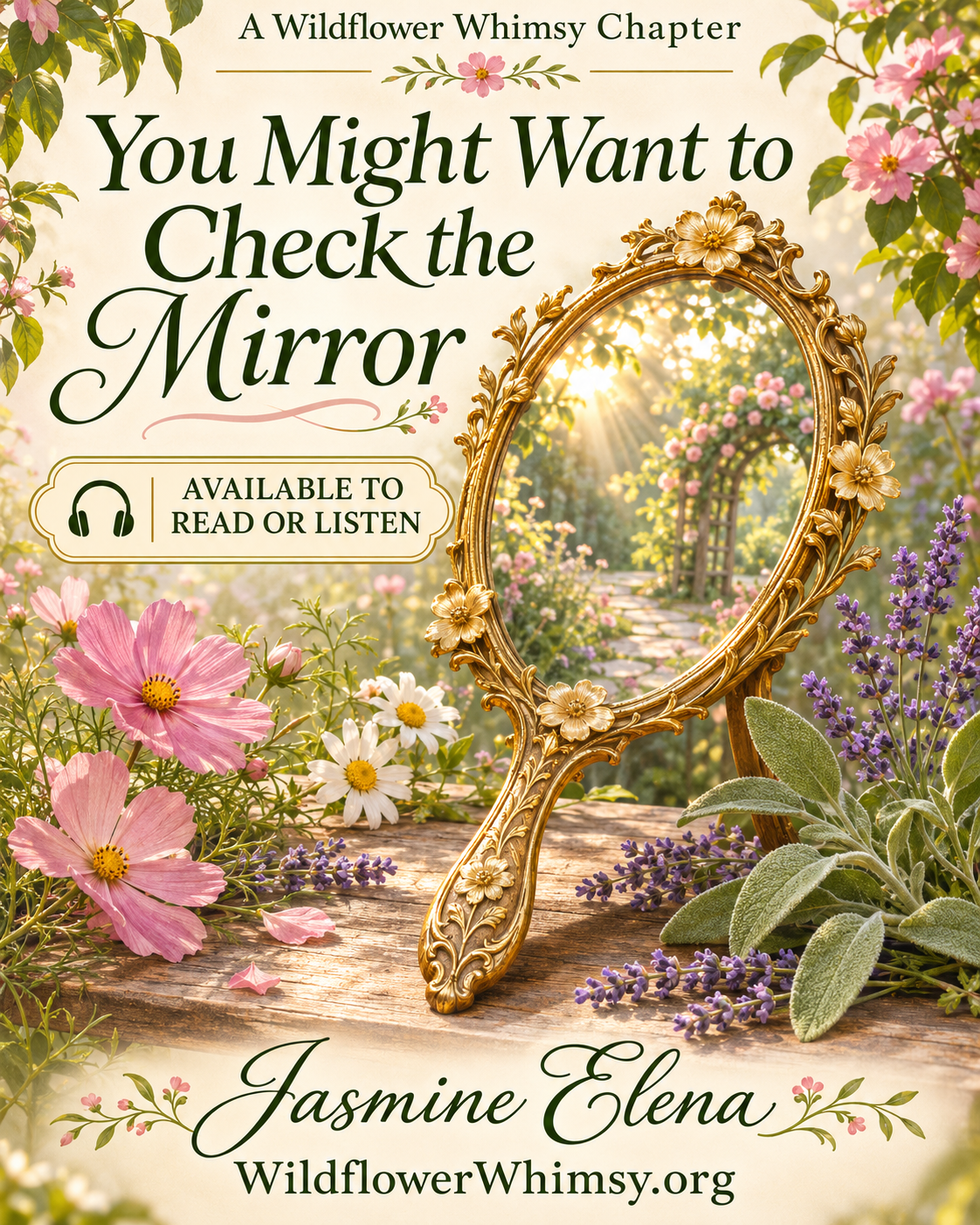
You Might Want to Check the Mirror
After working in a dusty area, I walked around unaware of the smut on my cheek—until a friend spoke up. An ordinary factory moment became a lesson about honest feedback, personal responsibility, and learning to examine our behavior without turning it into a judgment of our worth.

My Paper. My Pencil. My choice. ✏️❤️
What do a 63-hour workweek, an exploded tub of yogurt, a mischievous dog, and two brothers with a pencil have in common? A surprisingly powerful lesson about emotional regulation. In this humorous and heartfelt Everyday Parable, discover why feeling angry doesn’t mean losing your power, how to respond instead of react, and what happens when we teach our children that someone else’s behavior doesn’t have to write the rest of their story.
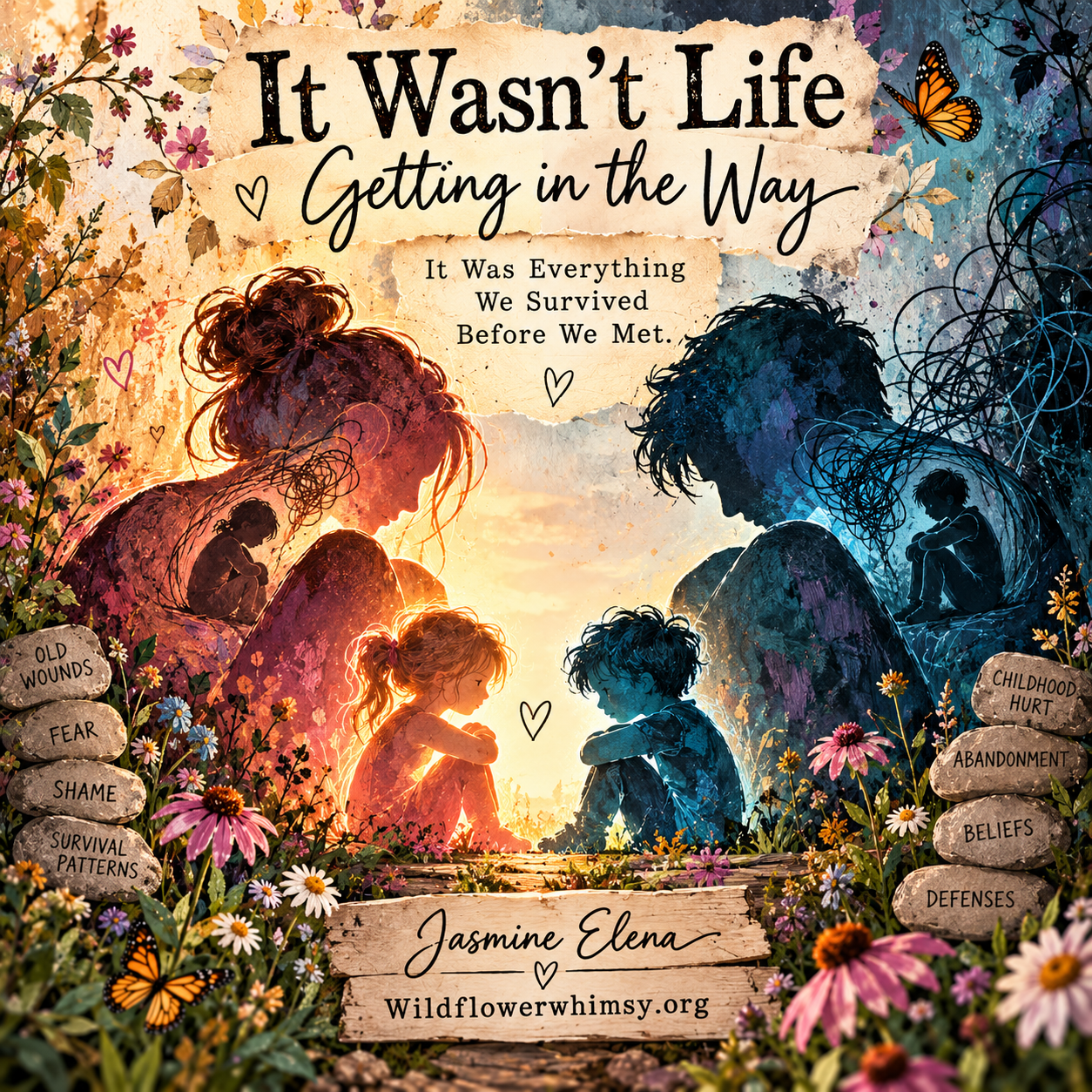
It Wasn’t Life Getting in the Way
I used to say, “Life just keeps getting in the way.” Now I understand that it wasn’t life. It was everything we had survived before we ever met—childhood wounds, fear, shame, abandonment, old defenses, and survival patterns filtering the way we saw each other. The love may have been real, but love alone could not heal what each of us had to face for ourselves.
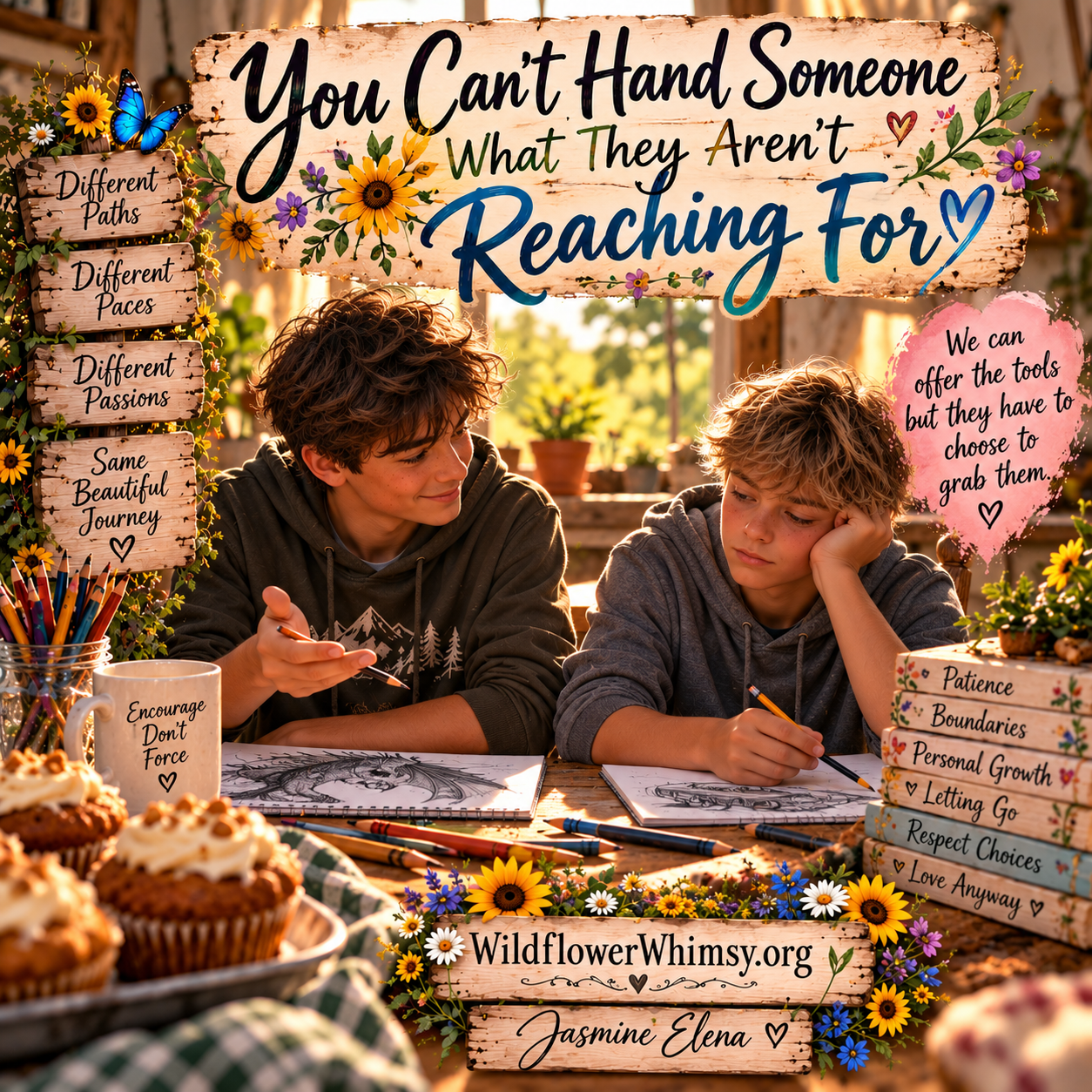
You Can’t Hand Someone What They Aren’t Reaching For The Difference Between Offering Help and Trying to Make Someone Receive It
A drawing competition between two brothers becomes an unexpected lesson in generosity, personal growth, and respecting another person’s choices. When Caleb can’t understand why Noah doesn’t want his artistic advice, their momma recognizes a truth from her own healing journey: we can offer wisdom, encouragement, and tools, but we cannot make someone want them. Sometimes love means extending an open hand—and allowing someone else to decide whether to take it.

The Purple House Does Your Life Look Like You?
I didn’t lose myself because I was weak.
I lost myself because I didn’t trust myself.
I became very good at looking around a room, figuring out who I was supposed to be there, and becoming her.
I wanted to be a good Christian woman.
So I asked everyone else what “good” looked like and followed the blueprint.
The strange thing about self-abandonment is that sometimes it looks responsible.
Polite.
Acceptable.
Good.
Sometimes people even applaud it.
Healing has been the process of learning to ask different questions:
Do I actually believe this?
Do I actually want this?
Would I still choose this if nobody called me good?
And slowly, one honest yes at a time, my life started looking like me again.

Oneness Is Not Sameness The Flowers Were Never Supposed to Match
For years, I think some part of me believed that if humanity became conscious enough, healed enough, loving enough, we would eventually arrive at the same conclusions.
But now I think that misunderstands oneness.
Oneness does not mean we become identical.
It means our differences were never proof that we were separate.
A garden is one ecosystem, but it does not contain one flower.
The rose gets to be a rose.
The sunflower gets to be dramatic.
The cactus gets to mind its own prickly little business.
None of them has to become the others in order to belong.
Maybe humanity is the same.
I can let you be fully you while I become fully me.
The flowers were never supposed to match.
They were only ever supposed to bloom.
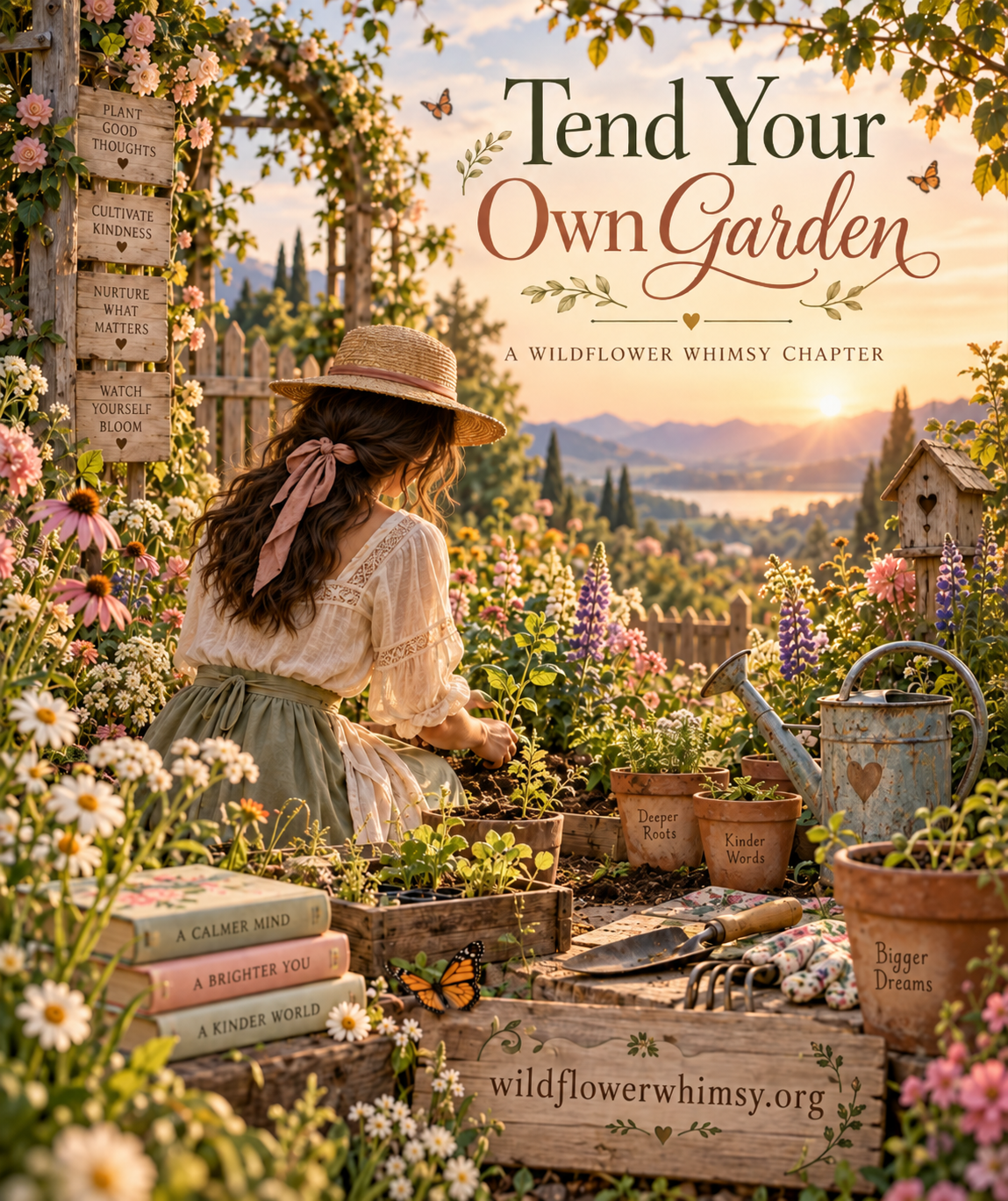
Tend Your Own Garden: The Most Special Thing About Me Is That I Finally Chose to Become Myself
For much of my life, I was an excellent mimic.
I watched people, adapted quickly, and learned what seemed acceptable in the room.
But copying someone else’s garden is not the same thing as discovering your own.
Healing changed that.
I started walking through my internal garden asking:
Who planted this?
That fear?
That need for approval?
That belief that rest has to be earned?
That instinct to rescue everyone?
And then I asked something even more important:
Do I want to keep watering it?
Attention is water.
Repetition is water.
The stories we tell ourselves are water.
Whatever we repeatedly feed begins growing roots.
Healing was never about turning myself into a better version of somebody else.
It was learning to tend the garden of my own mind until the life growing there finally felt like mine.

The Quiet Revolution What If We Led With Love Instead of Fear?
Excerpt
We spend so much time waiting for someone else to fix humanity.
The government.
The church.
The schools.
The leaders.
But institutions are made of people.
The world we keep waiting for someone to repair is, in a very real sense, made out of us.
Maybe the revolution begins when an ordinary person decides:
I will not let fear be the first filter through which I interpret the world.
Fear asks who is dangerous.
Curiosity asks whether I actually understand.
Love asks what reduces harm without forgetting anyone’s humanity—including my own.
Love is not a substitute for science, policy, medicine, education, or competence.
Maybe love isn’t the wrench.
Maybe love is the reason we pick up the wrench and decide what deserves repairing.
And perhaps the question worth carrying into every ordinary interaction is simply:
What would love and curiosity do here?

Teach them to Be Kind, Not Nice Love Given Under Threat is Survival
I don’t want my children to be kind because they are afraid of what someone might do to them.
I don’t want them respectful because they fear punishment, rejection, retaliation, or danger.
That isn’t kindness.
That is survival.
I want them to treat people well because they understand that the person standing in front of them is human too.
And I want them to love themselves enough to know when someone is treating them unkindly.
Kindness is not obedience.
Kindness is not fear.
Kindness is not making yourself smaller so everyone else stays comfortable.
Real kindness has a backbone.
It can say:
I see your humanity.
I respect your dignity.
And the answer is still no.
That is the kind of love I want my children to carry.

Cast Your Vote How We Become Ourselves One Conscious Choice at a Time
For a long time, I thought becoming a better person meant simply making better choices.
But healing taught me to look deeper.
Two people can make the exact same choice for completely different reasons.
I can help someone because generosity reflects my values.
Or I can help because I’m afraid they’ll stop loving me if I say no.
Same action.
Different vote.
Little Jasmine first learned to change her behavior because she was afraid of what would happen if she didn’t.
Adult Jasmine gets to choose differently.
Not because someone might yell my middle name.
Not because I need approval.
Not because I need to prove that I’m good.
I choose because I know the kind of woman I want to become.
Maybe character isn’t built through one enormous decision.
Maybe it is a lifetime of tiny elections.
And every time awareness places the ballot back into our hands, we get another opportunity to ask:
Who am I voting for today?

I Didn’t Heal the World. I Healed Mine. And maybe that is how the ripples begin.
For a long time, I thought healing had to mean something enormous.
I thought maybe if I healed deeply enough, I could somehow heal the world.
I don’t know that anymore.
What I do know is this:
My healing healed my world.
It changed the voice inside my own head.
It changed what I tolerate.
It changed the way I love.
It changed the way I experience an ordinary day.
I stopped living in other people’s opinions.
I stopped living entirely in the past.
I stopped waiting for the future to become better than the life I already had.
Healing didn’t give me a perfect existence.
It taught me how to live the one I was already standing in.
Little Jasmine kept walking long enough to get me here.
Now I get to live the life she carried all this way.

Driving on Vibes How Did I Make It This Far Without Seeing What Was Running Me?
For years, I thought anxiety, people-pleasing, hypervigilance, and overthinking were simply parts of my personality. Healing taught me to see the machinery underneath them. Maybe awakening is not knowing the whole road ahead. Maybe it is simply realizing your headlights are off—and finally reaching for the switch.

Clapping Like Nothing Happened
I used to think getting my children to church on time was proof that I was doing motherhood right. Looking back, I can see how often I sacrificed peace, autonomy, and connection for the appearance of being a “good family.” Healing taught me that love matters more than performance.

Thoughts Are Allowed in the Car They Just Don’t Get the Keys
I used to think peace would come when I finally figured out how to silence my mind.
Now I know better.
My mind never needed to disappear. My ego never needed to become my enemy. The baby never needed punishment. The chaotic coworker never needed termination.
They needed leadership.
They needed awareness.
They needed someone to stay.
And today, I did.
For hours, I stayed with myself so fully that the part of me accustomed to running the whole operation finally seemed to realize:
Oh. She’s home.
My thoughts are allowed in the car.
They just don’t get the keys.

I Saw Me
I think part of me had been waiting for a witness.
Someone to notice the distance between where I came from and what I created. Someone to say, I see how hard you worked. I see what you changed. I see what you gave your children that you never had.
But eventually I realized something:
I was there for every mile of it.
I know the effort. I know the love. I know what it cost me to build differently.
I can enjoy being recognized without requiring recognition to know my worth.
I saw me.

Sometimes ItJust Needs Gas The Problem Was Real. The Panic Was Optional
Sometimes the problem is real, but the panic is optional. I thought my sweeper had a serious mechanical problem. It turned out to be out of gas. Healing has taught me to stop letting uncertainty become catastrophe before I have all the facts.

I Was Born to Leave Things Better
Trauma shaped parts of me. It did not author all of me. I may have learned to create order because chaos felt unsafe, but when the fear started leaving, the tending remained. Maybe healing is not becoming someone entirely new. Maybe it is discovering which parts of you were survival—and which parts were you all along.

Once I Could Name It
I thought healing meant the old feelings would never return. Instead, healing taught me something better: they can return, and I do not have to go with them. Once I could see it, I could name it. Once I could name it, it lost its grip.